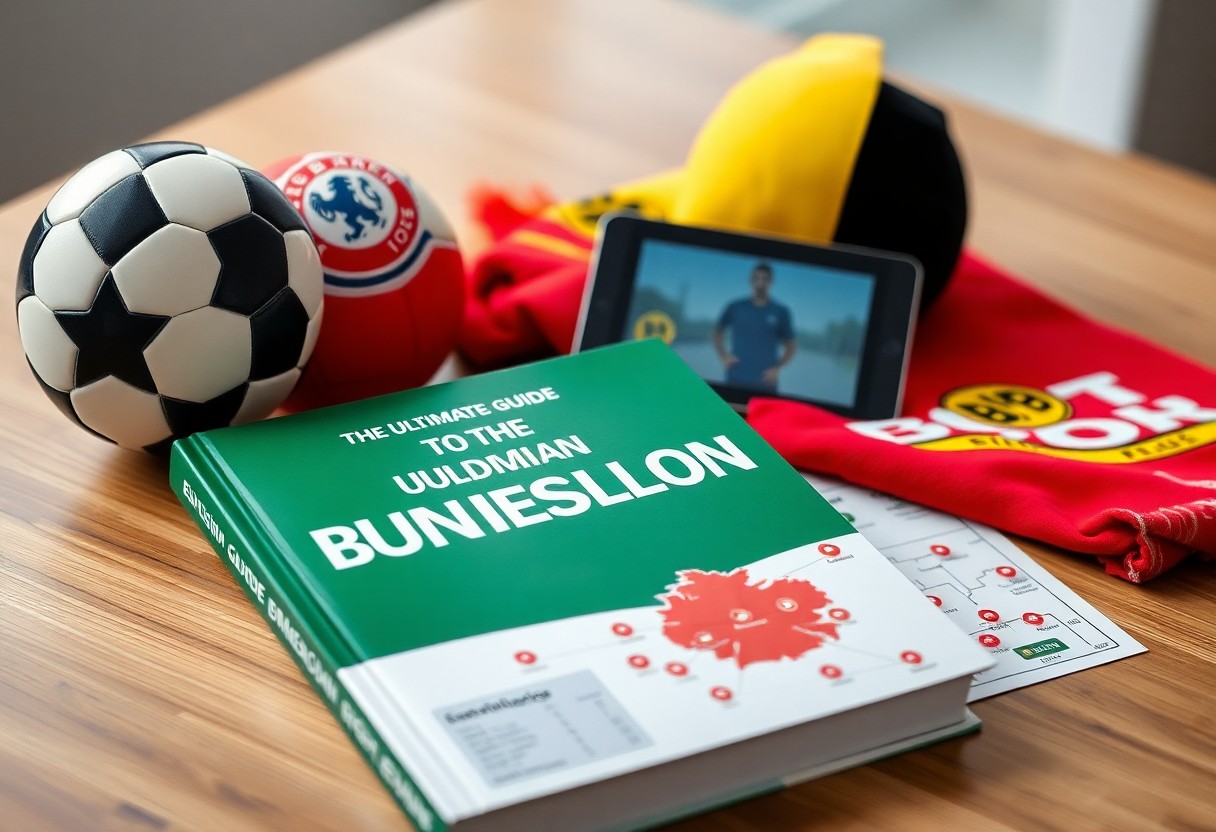
Most new fans find the Bundesliga a thrilling mix of tactical innovation and passionate supporters; this guide explains league structure, promotion and relegation, key clubs, and matchday culture while flagging relegation battles and the physical intensity that can surprise newcomers, plus the league’s financial stability and youth development that make it a leading destination for talent.
Understanding the Bundesliga
Overview of the League
The Bundesliga runs with 18 teams playing 34 matchdays from late summer to spring, with the top four qualifying for the UEFA Champions League and the bottom two automatically relegated while 16th enters a play-off. Matchday atmospheres are intense and the competition boasts the highest average attendance in Europe-often over 40,000-making home advantage and fan support measurable factors in outcomes.
Key Teams and Players
Bayern Munich remains the dominant force, but Borussia Dortmund, Bayer Leverkusen and RB Leipzig push regularly for top spots. Players to watch include creative talents like Jamal Musiala and Florian Wirtz, plus Dortmund academy products such as Youssoufa Moukoko; these names shape title races and transfer-market valuations.
Strategically, Bayern often controls games with possession and flexible formations, whereas Dortmund emphasizes rapid transitions and youth development; Leverkusen focuses on aggressive pressing and quick attacks. Clubs facing the drop shift toward pragmatic setups to secure points, and the financial hit from relegation-lost TV revenue and sponsorship-adds a high-stakes dimension to late-season fixtures.
Types of Matches
| Bundesliga league matches | 18 teams, 34 matchdays, standard 3-1-0 points; seasonal goals include top-four Champions League spots and avoiding the bottom two relegation places; intense fixtures like the Revierderby (Dortmund vs. Schalke) draw huge crowds. |
| 2. Bundesliga | Also 18 teams; top two earn automatic promotion, third enters a two-legged playoff vs. Bundesliga 16th; financial and attendance gaps are significant compared to the top flight. |
| Promotion/Relegation Playoff | Two-legged tie between Bundesliga 16th and 2. Bundesliga 3rd; matches are high-pressure with large financial implications for clubs involved and often attract tight tactical contests. |
| DFB-Pokal (Domestic Cup) | 64-team knockout including amateur clubs; single-match upsets are common and smaller venues host big nights; the winner gains a European place if not already qualified via the league. |
| European competitions | Bundesliga clubs compete in the UEFA Champions League, Europa League and Conference League; teams like Bayern Munich regularly reach late stages, with Bayern winning the 2019-20 Champions League. |
- Bundesliga matches
- 2. Bundesliga
- Promotion/Relegation Playoff
- DFB-Pokal
- European competitions
Bundesliga vs. 2. Bundesliga
The top-flight and second tier both run 18-team, 34-match seasons, but differ sharply in budget, TV revenue and average crowds (~43,000 in the Bundesliga versus ~21,000 in 2. Bundesliga). Promotion battles often decide club futures: the top two move up automatically while the third faces a two-legged playoff; this format produces dramatic end-of-season fixtures and heavy scouting by bigger clubs.
Domestic and International Competitions
Domestic cups like the DFB-Pokal pit Bundesliga sides against amateur clubs in knockout ties, creating potential giant-killings. On the international front, the top four league places send teams to the Champions League, with additional slots feeding the Europa and Conference Leagues depending on cup results and UEFA coefficients.
Recognizing the allocation: the Bundesliga’s top four enter the Champions League group stage directly, the DFB-Pokal winner usually secures a Europa League berth, and remaining European spots are assigned by league position or trickle down if the cup winner has already qualified; this affects squad planning, fixture congestion and transfer strategy for clubs juggling domestic survival and continental ambitions.
Essential Tips for New Fans
Start by mastering league structure: the Bundesliga has 18 teams and each club plays 34 matches from August to May; the bottom two are relegated and 16th enters a playoff. Buy official tickets early-high-demand fixtures like Der Klassiker sell out fast-and use club apps for e-tickets and seating maps. Be aware stadiums enforce bans on pyrotechnics and penalize disorderly conduct; large crowds create an electric atmosphere. Thou carry ID, arrive early, and follow steward instructions to stay safe and enjoy the match.
- Bundesliga: 18 teams, 34 matchdays, Aug-May
- Tickets: buy from club sites or official resellers; expect premium pricing for big derbies
- Der Klassiker: Bayern Munich vs Dortmund, extreme demand
- Relegation: bottom 2 down, 16th plays playoff vs 2. Bundesliga 3rd
- Fan culture: standing terraces, tifos, chants-ear protection advised for very loud sections
- Safety: avoid pyrotechnics, guard against pickpockets, use public transport
How to Follow the League
Use the official Bundesliga app for fixtures, live stats and highlights; follow club channels for lineups and behind-the-scenes content. Overseas fans should check local broadcasters or streaming platforms for rights and matchday passes. Track transfers and player data on Transfermarkt or kicker, subscribe to club podcasts for post-match tactical analysis, and monitor the table across all 34 matchdays to spot promotion and relegation battles.
Best Practices for Attending Matches
Arrive 60-90 minutes before kickoff-stadiums typically open around 90 minutes early-to clear security and soak up pre-match fan zones; Bundesliga average attendance often exceeds 40,000. Favor public transport or official shuttles to avoid traffic, secure valuables against pickpockets, obey steward directions, and never bring pyrotechnics or banned items to avoid fines or bans.
Choose seating based on experience: terraces deliver the loudest atmosphere, while seats suit families and quieter viewing. Expect bag checks and possible ID verification-away sections are usually segregated and policed-so present tickets and documents when asked. Half-time runs about 15 minutes, plan return transport accordingly, and if disorder occurs contact stewards or police rather than intervening yourself.
Step-by-Step Guide to Watching Bundesliga
Quick Steps
| Step | What to do |
| 1. Pick a service | Compare providers (examples: DAZN, Sky, Viaplay, Paramount+) and use free trials to test streams and commentary languages. |
| 2. Check rights | Confirm regional broadcast rights and blackout rules; consider mobile vs. TV apps and device compatibility. |
| 3. Set alerts | Subscribe to club apps or the official Bundesliga app for kickoff updates, lineup releases, and TV channel assignments. |
| 4. Prepare backup | Have a second stream or radio feed ready; note that VPNs may violate terms and can affect playback. |
Choosing a Broadcasting Service
Start by checking which providers hold rights in your country, then weigh price and coverage: international options include DAZN, Sky, Viaplay, Paramount+ and regional broadcasters. Expect monthly plans generally in the $5-$20 range depending on territory; choose services offering full-match replays, multi-angle or English commentary if you want deeper analysis. Use a free trial week to test stream stability and device support before committing.
Understanding Match Schedules
Fixture lists span 34 matchdays per season, typically from August to May with a winter break; matchweeks are clustered across Friday, Saturday and Sunday with occasional midweek fixtures for rescheduled games or European ties. Convert times to your zone – CET/CEST is usually 6 hours ahead of US Eastern Time – and set calendar alerts so you don’t miss start times or kickoff shifts due to TV selections.
Delving deeper, each Bundesliga matchday features staggered kickoffs to maximize TV coverage: expect a Friday evening game, several staggered Saturday fixtures (afternoon and evening), and a strong Sunday block plus occasional Monday or midweek matches. The league uses a round-robin format so every club plays 34 games; European competition and DFB-Pokal involvement often forces midweek reschedules, creating fixture congestion that can shift kickoffs at short notice. Always cross-check the official Bundesliga site and club channels 24-48 hours before kickoff for lineup releases, venue changes, and last-minute TV assignments to avoid surprises.
Factors to Consider in Supporting a Team
Decide whether you prioritise identity, sustained success, local proximity, or the matchday atmosphere; each leads to very different experiences. Evaluate financial health, youth development, and the manager’s philosophy, because those shape medium-term prospects. Compare travel time to the stadium and ticket prices if attending games regularly. Use data like recent points-per-game and injury lists when choosing a competitive side. Assume that your priorities will determine how enjoyable and sustainable support becomes.
- Team history
- Fanbase & atmosphere
- Stadium
- Manager & tactics
- Current form
- Financial stability
- Youth academy
- Rivalries
Team History and Culture
Examine founding dates and landmark seasons-Bayern Munich (founded 1900) versus Borussia Dortmund (founded 1909) shows a global brand against a Ruhr working-class identity; stadiums reflect that, with Signal Iduna Park (~81,365) creating intense home atmospheres while clubs like Union Berlin trade large-scale glamour for tight-knit community vibes at Stadion An der Alten Försterei (~22,000).
Current Form and Performance
Focus on the last 5-10 matches: calculate points per game, recent goal difference, and clean sheets to spot momentum shifts; note manager tenure and any key absences, since a suspended striker or injured centre-back often explains sudden dips in results, and a new coach can trigger a short-term uplift.
Dive deeper into metrics: track xG (expected goals) to tell whether attacking output is sustainable, watch pressing numbers and possession-adjusted defensive actions, and split home/away form-teams with a >0.5 point gap between home and away frequently depend on stadium advantage, so pairing that with fixture difficulty gives a clearer projection.
Pros and Cons of Being a Bundesliga Fan
| Pros | Cons |
|---|---|
| Electrifying matchday atmospheres; Signal Iduna Park holds 81,365 and Borussia Dortmund averages near full capacity. | Bayern Munich’s dominance often reduces title suspense and hand-picks Champions League spots. |
| League-wide emphasis on youth development – Dortmund, Leipzig and Hoffenheim regularly produce stars like Jadon Sancho and Erling Haaland. | Top young talents are frequently sold abroad within a few seasons, weakening long-term squad continuity. |
| Fan-centric governance via the 50+1 rule preserves local identity and affordable ticketing. | The 50+1 rule also limits big external investment, constraining budgets compared with the Premier League. |
| High average attendance (often the highest among Europe’s top leagues, ~40,000-45,000) creates consistent revenues and atmosphere. | International TV revenue trails the EPL, reducing global reach and commercial muscle. |
| Fast, attacking, high-press football makes the league entertaining and scouting-rich for talent hunters. | Weekly quality can vary; some matches are tactical mismatches that disappoint neutrals seeking top-10 clashes. |
| Strong club academies and structured scouting lower recruitment risk and deliver long-term value. | Smaller broadcast budgets mean fewer marquee signings and lower player salaries versus England and Spain. |
| Financial licensing rules promote stability and fewer bankruptcies than some leagues. | Stability can mean conservative spending, slowing ambitious project timelines. |
| Close-knit supporter culture leads to passionate rivalries (e.g., Revierderby) and vibrant local traditions. | Smaller global fanbases for many clubs limit international merchandise availability and outreach. |
Advantages of Following the League
Fans get one of Europe’s best atmospheres – Dortmund’s Yellow Wall and stadium fills routinely exceed 40,000 on average – plus rapid player development: Dortmund and RB Leipzig have turned teenagers into marketable stars, while the 50+1 fan-ownership model keeps tickets affordable and clubs community-driven, offering authentic matchday rituals and frequent youth-first tactical excitement.
Potential Drawbacks
The biggest downsides are predictability at the top and constrained finances: Bayern’s repeated title wins dampen suspense, and domestic plus international TV deals lag behind the Premier League, which limits clubs’ ability to retain talent and compete in transfer markets.
Furthermore, talent pipelines mean elite prospects often depart quickly-Jadon Sancho and Erling Haaland are prime examples-so squads cycle fast; combined with conservative ownership rules, that creates a trade-off between preserving fan control and achieving rapid competitive growth on the European stage.
Conclusion
Summing up, “The Ultimate Beginner’s Guide To The Bundesliga – Everything You Need To Know” equips newcomers with league history, competition format, standout clubs and players, tactical trends, and viewing guidance, offering practical steps to build informed fandom and engage confidently with Germany’s top-flight football.
FAQ
Q: What is the Bundesliga and how is the league structured?
A: The Bundesliga is Germany’s top professional football league, made up of 18 clubs that each play a double round-robin season (34 matches: home and away against every opponent) running roughly from August to May with a winter break. Teams earn three points for a win and one for a draw; standings are decided by points, then goal difference, then goals scored (if still tied a deciding match may be required). The Bundesliga operates alongside domestic cup competition (DFB-Pokal) and German clubs also compete for UEFA places based on league position and cup results. Matchdays are typically concentrated on weekends with occasional midweek fixtures and international breaks for national team matches.
Q: How do promotion, relegation and European qualification work?
A: At season end the bottom two Bundesliga teams are automatically relegated to the 2. Bundesliga, while the top two from the 2. Bundesliga are promoted. The 16th-placed Bundesliga team plays a two-leg playoff against the 3rd-placed 2. Bundesliga side to decide the final spot. European qualification: the top Bundesliga finishers earn UEFA Champions League places (typically four spots), the next highest earn Europa League and Europa Conference League places depending on domestic cup outcomes. If the DFB-Pokal winner has already qualified for Europe via the league, the next-highest league position inherits that European spot.
Q: How can a beginner best follow the Bundesliga and what should they know about matchday culture?
A: To follow the Bundesliga, use official sources (club sites, bundesliga.com, league apps), international broadcasters and legal streaming services in your region, and highlight compilations on club and league channels for condensed viewing. For live attendance, buy tickets from club ticket offices or verified resale platforms, arrive early, use public transport (many stadiums are transit-accessible), and be prepared for strong home support: standing terraces, coordinated chants, scarves, and large tifos are common. Respect stadium rules (no large bags, follow steward instructions) and note that fan culture is passionate but generally family-friendly; learn basic club nicknames and key rivalries (e.g., Klassiker Bayern vs Dortmund, Revierderby Dortmund vs Schalke) to enhance the experience.