
Why trophies are a useful lens for comparing club greatness
When you compare football clubs across countries and eras, trophies provide a concrete way to measure success. Trophies capture sustained performance, moments of peak dominance and the ability to win under different formats and pressures. They also give you a narrative: clubs with many league titles often show long-term domestic consistency, while clubs with multiple continental trophies demonstrate the ability to compete under unfamiliar conditions and travel.
However, trophies don’t tell the whole story. Financial power, youth development, global brand and influence on playing styles matter too. Still, if you’re trying to rank clubs by on-field silverware, counting and contextualising trophies is the place to start.
Which competitions are normally counted and why the totals can be disputed
Major categories you should include
- Domestic leagues — national championships (e.g., Premier League, La Liga, Serie A). These show season-long consistency.
- Domestic cup competitions — knockout cups (e.g., FA Cup, Copa del Rey). They often reflect depth and ability to handle high-pressure single matches.
- Continental tournaments — the highest-weighted trophies in cross-border club football (e.g., UEFA Champions League, Copa Libertadores).
- FIFA and intercontinental cups — Club World Cup and the predecessor Intercontinental Cup, which measure a club’s claim to global supremacy.
Gray areas and counting debates
- Super cups (national or continental) are sometimes included and sometimes discounted because they are one-off matches.
- Historical competitions, regional championships and wartime editions may be recognised by some statisticians but not by official modern governing bodies.
- You’ll find different lists depending on whether you prioritise official recognition (by FIFA/UEFA/CONMEBOL) or broader historical context.
When you read club rankings, check the methodology: are only “major” trophies counted, or is every official competition included? That choice materially changes where some clubs sit on the all-time leaderboard.
Early winning eras that set the benchmark for later giants
Understanding which clubs dominated earlier decades helps you see how modern powerhouses formed. In the 1950s and 1960s, certain teams established continental reputations that would attract talent and resources for decades. Domestic dynasties in the mid-20th century often translated into early continental success, which in turn boosted global recognition and revenue streams.
For example, you can trace modern dynasties to pioneering eras: clubs that built winning cultures, professionalised scouting and coaching, and leveraged early success into sustained trophy hauls. When you study those early eras you’ll also notice structural differences — fewer competitions, different travel conditions and different financial realities — that make direct comparisons with today imperfect but still instructive.
Next, you’ll dive into club-by-club trophy counts and the defining winning eras for the modern giants, examining exactly how many major titles each holds and when they were won.
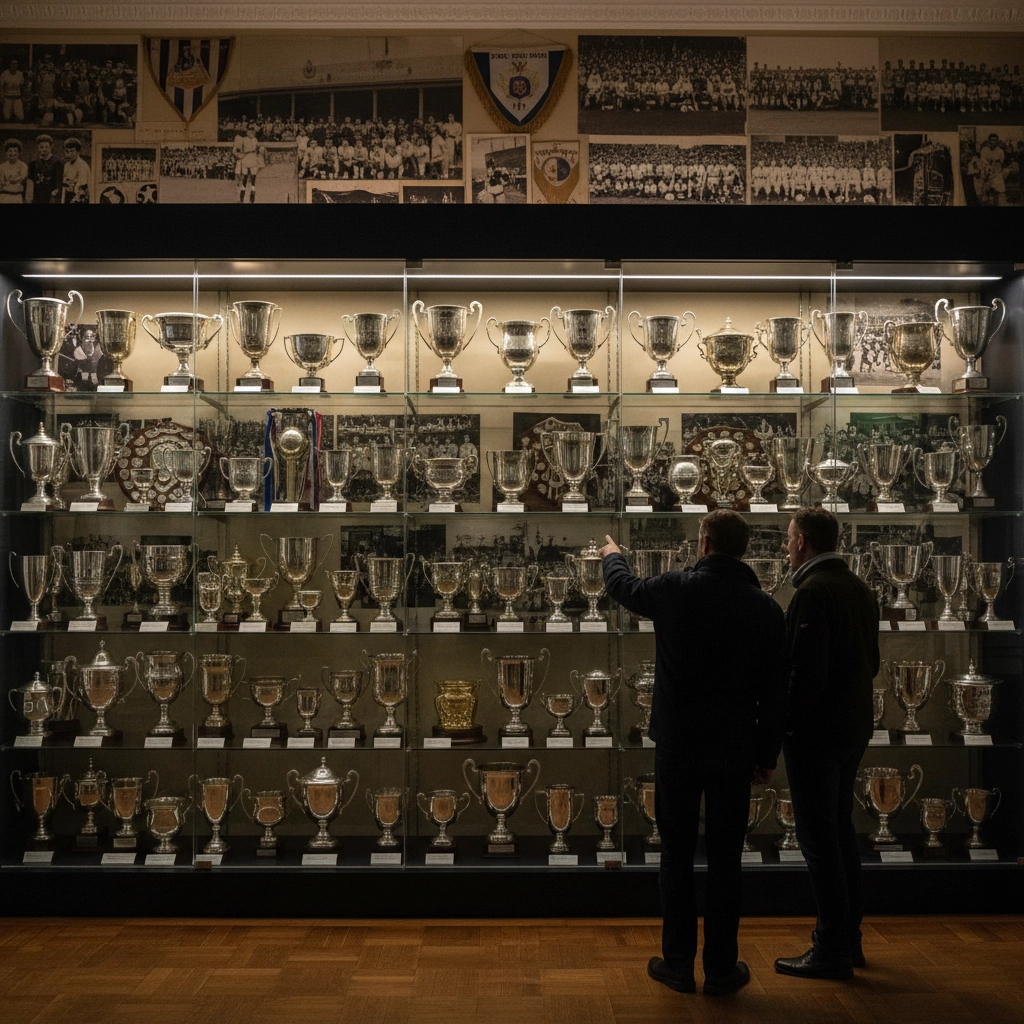
European heavyweights: trophy hauls and the eras that produced them
When you look at Europe’s most decorated clubs, a pattern emerges: long stretches of domestic dominance paired with punctuated continental peaks. Real Madrid and AC Milan built reputations on European trophies as much as on domestic success — Real with their pioneering 1950s European Cup run and a modern renaissance in the 2010s and early 2020s, Milan with back-to-back continental power in the late 1980s and a return in the mid-2000s. Bayern Munich and Juventus exemplify near-continuous domestic hegemony; Bayern’s repeated Bundesliga títulos and two recent Champions League trebles (2013 and 2020) underline how sustained national supremacy becomes a platform for continental glory.
England’s big names tell a slightly different story. Manchester United’s haul is inseparable from the Ferguson era (early 1990s–2013), which produced a dense cluster of league titles and European success; Liverpool’s trophy map shows dominant periods in the 1970s–80s and a major resurgence under Jurgen Klopp with a Champions League (2019) and a domestic title (2020). Barcelona’s modern peak under Pep Guardiola (2008–2012) converted domestic dominance into a distinct global identity through possession-based football and multiple Champions League triumphs.
What ties these clubs together is how eras are formed: a visionary coach, a generation of players, and the financial and institutional stability to sustain success. That concentrated success often leads to the highest-profile trophies — European Cups/Champions Leagues and Intercontinental/Club World Cups — which disproportionately magnify a club’s historical standing even when total domestic tallies are comparable.
South American powerhouses: Libertadores glory and the rhythms of domestic competition
On the other side of the Atlantic, continental trophies carry immense cultural weight. Clubs like Independiente, Boca Juniors, River Plate, Peñarol, Nacional, Santos and Palmeiras are judged as much by their Libertadores records as by league titles. Independiente’s sustained success in the 1960s and 1970s made them synonymous with the Copa Libertadores; Santos’ golden age in the 1960s under Pelé remains a defining era worldwide; Boca and River have traded periods of domestic dominance with continental peaks across decades, their rivalry amplified by Libertadores clashes.
South American club calendars and finances mean that continental success often comes in bursts: a club builds a squad capable of conquering the continent, then player sales and economic realities reset the cycle. That cyclical nature creates distinct eras — short, brilliant runs rather than the multi-decade commercial dynasties you see in Europe. When comparing trophy counts across continents, it’s important to weight Libertadores and Copa Libertadores-era intercontinental trophies heavily, since they reflect a club’s ability to win beyond familiar domestic contexts.

Single trophies, disputed counts and the narrative effect of landmark wins
Not all trophies are equal in narrative impact. One European Cup or one Libertadores can transform a club’s global reputation far more than several minor domestic cups. Intercontinental and Club World Cup wins — one-off fixtures by design — are often treated as tipping points in how history remembers a season. This is why debates over whether to include certain regional or defunct competitions matter: a club’s official “major” total might be lower on a conservative list, but its legacy — the eras fans and historians point to — depends on those headline achievements.
When assessing the most successful clubs, pair counts with chronology. A club with a concentrated era of high-profile continental wins often commands more historical weight than a club with the same number of trophies spread thinly across a century. Tallying honours is the start; understanding when and under what conditions they were won is what makes the numbers meaningful.
Putting trophy counts in a living context
Trophy totals are a powerful shorthand, but they live inside changing football landscapes — shifting competition formats, evolving economics and new continental dynamics mean rankings are always snapshots rather than fixed truths. Fans and historians will continue to debate which competitions should count and how to weight them; that debate is part of how club legacies are made and contested. If you want to explore official competition histories and current formats, authoritative sources such as UEFA competitions are a useful starting point. Ultimately, the numbers matter most when paired with the stories behind them: the coaches, players and seasons that turned individual trophies into enduring eras.
Frequently Asked Questions
Do all trophy lists count the same competitions?
No — lists differ. Some count only major national leagues, primary domestic cups, continental tournaments and recognized world titles; others add super cups, regional competitions or historical editions. Always check the methodology behind any ranking to understand what’s included.
Which trophies are considered the most important when comparing clubs internationally?
Continental tournaments (e.g., UEFA Champions League, Copa Libertadores) and intercontinental/world titles (Intercontinental Cup, FIFA Club World Cup) are typically weighted highest for international comparisons because they demonstrate success beyond domestic contexts.
How should we compare dominant eras across continents?
Compare eras by context: consider competition formats, player movement and financial structures at the time. European dynasties often reflect commercial stability and squad depth, while South American peaks may be shorter but marked by intense continental success. Weighting trophies with historical circumstances gives a fairer comparison than raw counts alone.