South America’s football soul: why its players capture global attention
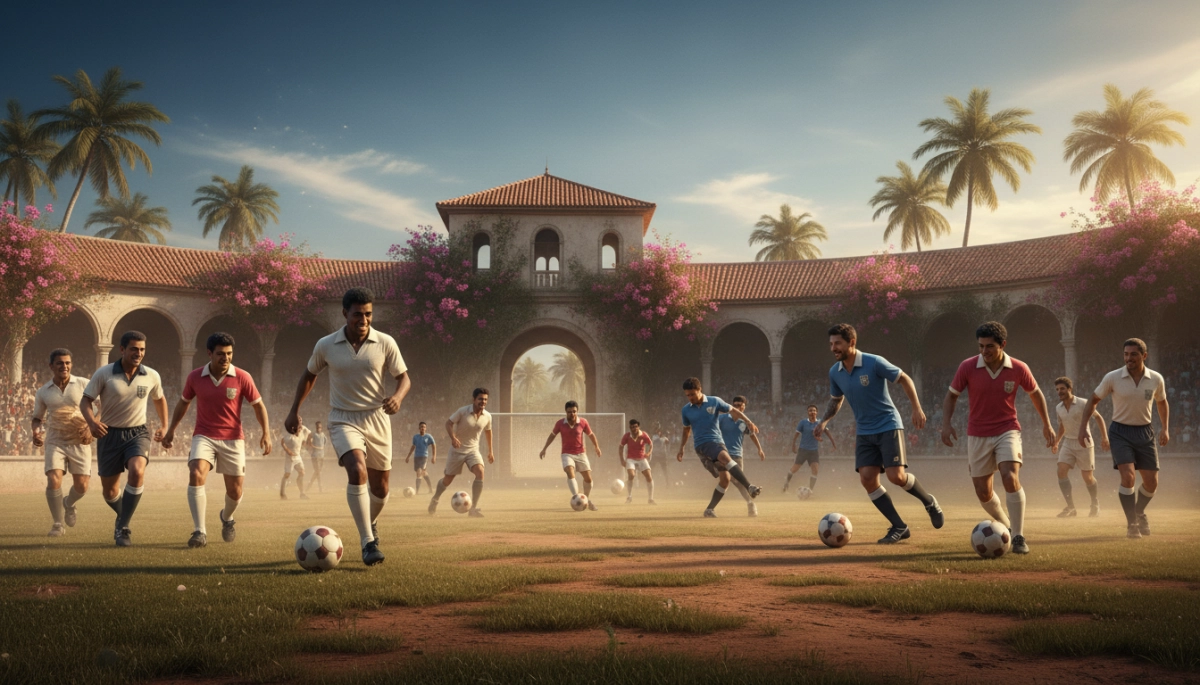
You already know that when the world talks about flair, creativity, and passion in soccer, South America frequently leads the conversation. From dusty neighborhood pitches to packed stadiums, the continent has produced players whose skills and personalities changed how you watch the game. This section helps you understand the cultural and tactical roots that shaped those legends, so you can appreciate not just the names, but the forces that made them exceptional.
What sets South American players apart for you
If you pay attention to playing style, development pathways, and fan culture, several recurring traits explain why South American talent stands out. These are not just anecdotes; they are patterns you can trace across generations and countries.
- Emphasis on technical skill: You’ll notice tight ball control, dribbling creativity, and improvisation—skills often developed in informal street and futsal settings.
- Expressive attacking mindset: Players are encouraged to take risks, attempt creative solutions, and prioritize forward play, which makes matches exciting and unpredictable.
- Resilience and versatility: Economic constraints and competitive local leagues mean many players learn multiple positions and mental toughness early on.
- Deep local support systems: You can see how clubs, academies, family networks, and community pride all collaborate to nurture talent from a young age.
How history and culture built a footballing tradition
You can’t separate the rise of South American stars from history: migration patterns, urbanization, and social clubs all fed the football pipeline. In the early 20th century, immigrants brought new ideas and organizational models, while densely populated cities created the perfect environment for informal play to flourish. That combination turned local heroes into national icons and, eventually, global stars.
Key structural factors that shaped early development
Several concrete developments created pathways for talent that you can still trace today:
- Club-based youth systems: Major clubs invested in youth teams, scouting local neighborhoods where you might spot future professionals playing for fun.
- Regional competitions: Tournaments and rivalries sharpened competitive instincts and gave players frequent high-stakes experience.
- Futsal and street football: Small-sided games demanded quick thinking and tight control—skills that translated directly to elite-level play.
Early icons who defined a continental style
Before contemporary superstars dominated headlines, you became familiar with earlier figures who embodied South American football’s essence. Artists like Pelé and Garrincha in Brazil, Alfredo Di Stéfano’s influence stretching from Argentina to Europe, and Argentina’s early technical leaders established templates you still see in modern players. These pioneers taught you how ball mastery, creativity, and leadership could reshape a team and a nation’s identity.
Next, you will explore individual legends by country—starting with the giants from Argentina and Brazil—and examine how their careers and personal stories changed football worldwide.
Argentina: maestros who blended grit with genius
When you think of Argentine football, you probably picture low center of gravity, exquisite close control, and an almost theatrical mix of stubbornness and artistry. Two careers capture that spectrum in the most dramatic way: Diego Maradona and Lionel Messi. Maradona’s story is about myth and contradictions—growing up in Villa Fiorito, carrying a nation on his shoulders at Napoli and during the 1986 World Cup, producing moments of sublime dribbling and the infamous “Hand of God.” His life made you see how a player can become a cultural symbol, embodying working-class pride and political resonance beyond the pitch.
Messi represents another arc: the quiet genius who rewrote statistical records while refining the Argentine tradition. You’ve watched him develop through Barcelona’s La Masia into a forward whose low center of gravity, angled runs, and vision make defenses look static. His Copa América win in 2021 was more than a trophy—it was a narrative closure that linked his club supremacy to national redemption. Between those two lives, other Argentine figures—like Juan Román Riquelme’s playmaking poetry or Gabriel Batistuta’s clinical finishing—remind you that Argentina’s contribution spans creators, finishers, and leaders who shape team identity as much as individual highlight reels.
Brazil: samba soul and the art of improvisation
You already know Brazil’s footballing reputation for flair, but the individual stories explain why that style became global currency. Pelé and Garrincha set early templates: Pelé’s athletic completeness and scoring instincts, Garrincha’s joyful unpredictability. Later icons extended the samba language—Zico’s elegance, Romário’s selfish efficiency, Ronaldinho’s smile-and-trickery that made goal celebrations part of performance art.
When you study Brazil’s export of talent, notice how creativity was packaged for different tactical eras. In the 1970s and 1980s you had playmakers and dribblers who dominated games; by the 2000s, players like Kaká combined technique with physical professionalism. Neymar represents the contemporary mix: street-born dribbling, global brand management, and occasional tactical controversies. Across generations, Brazilian players taught coaches and fans to value improvisation and joy as tactical weapons—how a sudden feint, a backheel, or a no-look pass can destabilize rigid defensive systems and change match outcomes.
Beyond the giants: smaller countries, big influences
Don’t let the spotlight on Argentina and Brazil make you overlook other nations that shaped world football. Uruguay, with its two World Cups and relentless competitive culture, gave you players like Enzo Francescoli and Luis Suárez—figures who combine technical skill with ruthless determination. Colombia introduced you to a different kind of flair: Carlos Valderrama’s vision, James Rodríguez’s shot from distance, and a tradition of creative midfield orchestration.
Chile’s recent generation—led by Alexis Sánchez and Arturo Vidal—showed how a smaller nation can craft a collective identity (high press, intense work-rate) to win back-to-back Copa Américas. Paraguay, Ecuador, and Peru have also produced specialists: towering defenders, quick wingers, and tactical adaptors who thrive in altitude or under pressure. Together, these countries remind you that South American excellence isn’t monopolized by a few stars; it’s a continent-wide ecosystem where different schools of football produce varied, influential talents.
The legacy continues
South American football is less a finished story than an ongoing conversation between past masters and new voices. Tradition supplies the vocabulary—technique, creativity, and resilience—while each generation adds new grammar: tactical discipline, global mobility, and media savvy. As talent pathways evolve, so will the faces that capture your imagination; the continent will keep producing players who push the game forward on and off the pitch. For schedules, tournament news, and profiles that help you follow emerging stars, visit the CONMEBOL official site.
Frequently Asked Questions
What traits make South American players stand out internationally?
Players from South America are often noted for exceptional technical skill, creativity developed through futsal and street football, an attacking mindset that favors improvisation, and psychological resilience shaped by competitive local environments.
Which South American countries have had the biggest global impact on football?
Argentina and Brazil are the most globally recognized due to their World Cup histories and export of top players, but countries like Uruguay, Colombia, Chile, Peru, Paraguay, and Ecuador have also produced influential stars and distinct footballing schools.
How do youth systems and informal play contribute to player development?
Formal club academies provide structured coaching and scouting, while futsal and street football teach close control, quick decision-making, and creativity. The combination creates versatile players capable of adapting to many tactical systems.