Why Haaland’s 2024 form is essential watching for players and fans
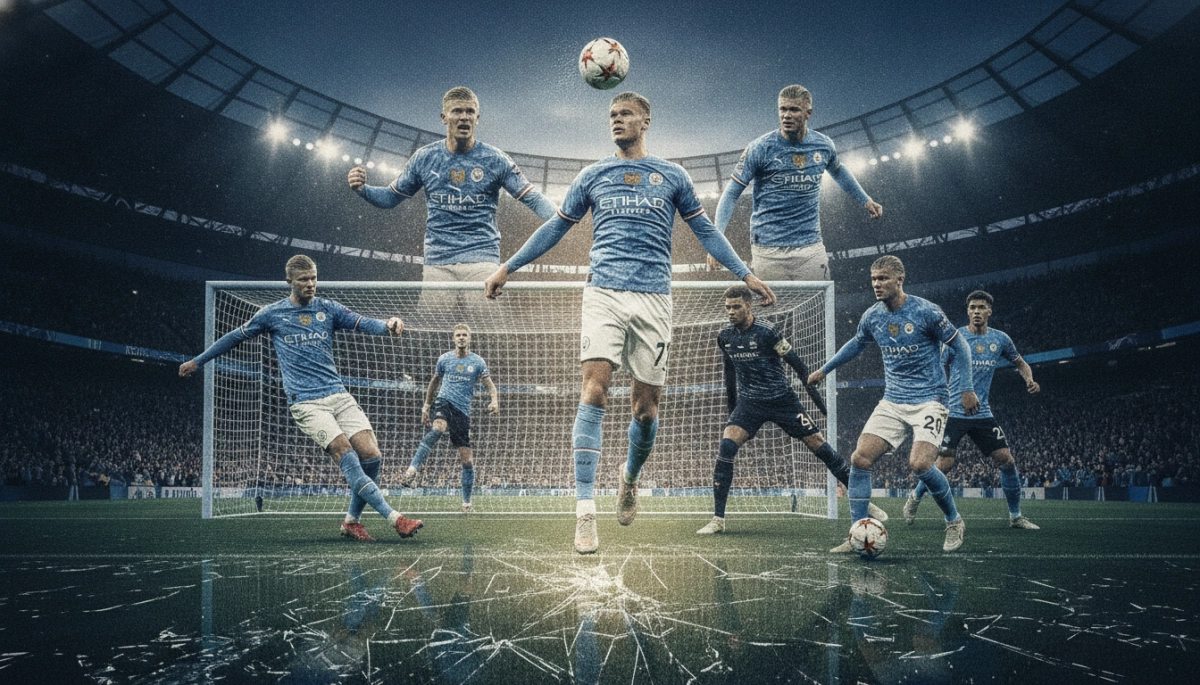
You know a player is special when every touch, run and finish becomes a teaching moment for coaches and aspiring forwards. In 2024 Erling Haaland continued to turn high-percentage chances into moments that define matches. This section gives you the context you need before diving into individual clips: the trends in his scoring, the technical traits to watch, and the reasons his highlights are useful beyond pure entertainment.
Watching his sequence play and goal selection helps you understand positional timing, movement off the ball, and how physical traits are paired with simple, repeatable technique. Rather than isolated brilliance, many of Haaland’s best moments in 2024 reveal patterns — the kinds of runs, body shapes, and finishing choices that you can analyze and practice.
What to look for in his 2024 goals — recurring patterns and goal types
When you study Haaland’s goals from 2024, several clear categories emerge. Identifying these categories will help you break down clips with purpose, whether your aim is tactical insight or technical improvement.
- Penalty and one-on-one composure: efficient placement, minimal stutter, and consistent decision-making under pressure.
- Poacher finishes: tap-ins and smart positioning inside the six-yard box — a product of timing and anticipation rather than pure athleticism.
- Powerful long-range strikes: moments where he connects cleanly with space to generate velocity and accuracy from outside the box.
- Counter-attacking conversions: explosive straight-line runs that exploit transitional gaps and require fewer touches to finish.
- Headers and aerial dominance: using leverage and timing more than height alone to win and finish aerial duels.
As you watch clips, annotate which category each goal fits and note the preceding cues: how the midfield shaped the chance, how defenders reacted, and where Haaland positioned his body for the finish. That habit will turn passive viewing into practical learning.
Early-season free-kick development and the mechanics behind his strikes
Free-kicks were not historically Haaland’s signature but, by 2024, you can see deliberate progress in his approach. Focus on three mechanical elements when analyzing his free-kick attempts:
- Approach angle: a straighter or slightly diagonal run affects the contact point on the ball and the resulting trajectory.
- Contact and follow-through: whether he strikes with the instep for power or the side of the foot for curl, and how his follow-through shapes ball spin.
- Target selection: the decision to hit power into a corner versus finesse over a wall — dictated by distance and goalkeeper positioning.
By comparing several free-kicks side by side, you’ll see incremental adjustments in his setup and execution that suggest coaching input and practice focus. Keep those mechanical points in mind as you move into the next part, where you’ll get a clip-by-clip breakdown of his most instructive goals and free-kicks from 2024.
Clip-by-clip breakdown: five 2024 goals every forward should study
Below are five distinct clips from Haaland’s 2024 reel — each chosen because it isolates a teachable moment. For each clip note the pre-shot cues, the execution details, and one actionable drill you can use in training.
-
Clinical one-on-one after a diagonal switch
Build-up: a quick diagonal switch from the right flank creates space. Haaland times a near-post run as the full-back turns inward.
Execution: short chested touch to open his body, minimal hop to maintain momentum, placed finish into the far post with the inside of the boot.
Drill: practice diagonal-switch patterns with a finishing station — passer on the flank, defender closing, striker times near-post run and finishes first-time into small goals. -
Poacher’s tap-in from a scrappy rebound
Build-up: heavy traffic inside the six-yard box after a blocked shot; Haaland’s movement is subtle, probing pockets rather than occupying the center.
Execution: lightning reaction, soft outside-of-the-boot touch to redirect while keeping hips open to goal; no wasted adjustment — a micro-first-touch finish.
Drill: two-goalkeeper rebound drills (keeper saves, coach recycles ball) forcing attackers to react quickly to second balls. -
Long-range thunderbolt on the half-volley
Build-up: ball cleared to Haaland just outside the box with a fraction of space; he adjusts body angle to weight the shot.
Execution: locked ankle, plantar contact on the lower hemisphere, full follow-through generating low trajectory and pace that skims inside the corner.
Drill: half-volley circuits — receive from a height, settle one touch and strike the next with focus on foot position and hip rotation. -
Explosive counter finish after a turnover
Build-up: midfield win then direct outlet pass; Haaland runs the vertical channel, dragging a center-back with him to create a cut-back option.
Execution: explosive first two strides to separate, low center of gravity into the final touch, composed placement into open side of the net.
Drill: transition sprints + finishing under fatigue: quick outlet, 10m sprint, one-touch finish on goal. -
Aerial finish from a deep cross
Build-up: cross-field diagonal from the halfway line; he peels away from the nearest marker to attack the ball at the highest point.
Execution: gets under the ball, drives hips into the header, directs power with neck and upper back rather than relying on jump height alone.
Drill: contested crossing routines emphasizing timing and contact point rather than raw vertical leap.
Free-kick clips: small adjustments that made the difference
Haaland’s free-kick evolution in 2024 is subtle but instructive. Watch three free-kick clips together and contrast the small variations that produced different outcomes.
- Powerful corner-corner attempt: nearly straight-on approach, planted foot angled slightly outward, struck low on the ball’s lower-mid section. Result: driven, little dip — ideal when a keeper is narrow.
- Curled over-the-wall dip: diagonal approach, lateral hip rotation, strike with the instep’s side producing topspin and abrupt dip. Result: finesse loop over the wall into upper corner.
- Deceptive short-range variation: minimal run-up, toe-poked flick to a teammate’s run — variation used to unsettle organized walls and exploit zonal markers.
Practice notes:
- Repeat the same distance from 18–25m with three approach angles (straight, slight diagonal, pronounced diagonal) and record which contact point gives the intended trajectory.
- Work on ankle lockdown and toe position: small changes in where the foot meets the ball change spin dramatically.
- Include decision drills with a goalkeeper reading your body shape so you practice choosing power vs. curl according to keeper positioning.
Skill and link-up highlights: using quick feet to create big chances
Beyond raw finishing, Haaland’s 2024 clips show intelligent close control and link-up play that converts team sequences into goals. Key patterns to watch:
- One-touch layoffs: he times his body to cushion and redirect rather than chase the ball, turning half-chances into shots within two touches.
- Shielding and small fakes: subtle shoulder feints to hold off defenders while allies arrive — not flashy but ruthlessly effective.
- Spatial awareness in tight areas: when pressed, he habitually opens his hips to see options and plays angled passes to feet rather than attempting risky flicks.
Training suggestions:
- Rondo variations with a finishing trigger — win a 2v1 and convert within three touches.
- Ball control circuits under pressure focusing on first touch into space (side, back, half-volley).
- Two-player combination drills (wall passes and blind lay-offs) to reinforce timing and expectation between striker and creator.
Putting the clips into practice
Use Haaland’s 2024 highlights as a lens, not a blueprint. Choose a single trait from the reel (one-on-one composure, half-volley technique, set-piece variation, aerial timing, or link-up movement) and focus on it for a week of training. Record attempts, compare them side-by-side with the clips, and tweak one detail at a time — foot placement, approach angle, or first touch — until the change is consistent under pressure. For reference material and match footage, check Haaland’s profile on the Premier League.
- Pick one technical focus and set a measurable goal (e.g., 8/10 successful near-post finishes from diagonal switches).
- Design two specific drills from the clip breakdowns and cycle them into training three times that week.
- Film practice reps, note small mechanical changes, and review with a coach or teammate to accelerate improvement.
Whether you’re a coach, player, or fan, the value of a highlights reel comes from study and repetition. Take the teachable moments, translate them into targeted drills, and let incremental adjustments compound into clearer decision-making and cleaner execution on game day.