How tactical metrics change goals markets in La Liga matches
This part explains how five tactical metrics affect common goals-focused markets in La Liga betting: Over/Under (total goals), Both Teams To Score (BTTS), and Asian handicap. It will define each market briefly, then show how pressing intensity, possession style, crossing frequency, set-piece vulnerability and expected-goals (xG) patterns translate into betting cues you can use before kick-off or during live play.
Quick market definitions for beginners:
- Over/Under: A bet on whether total goals exceed a line (e.g., Over 2.5).
- Both Teams To Score (BTTS): A bet that both sides will score at least one goal.
- Asian handicap: A goal-difference handicap that evens up matches and removes the draw; useful for backing favourites or underdogs with reduced variance.
Key tactical metrics and what they mean for goals bets
Pressing intensity — high press equals faster transitions and variable lines
Teams that press aggressively (high pressing intensity) force turnovers higher up the pitch but also leave space behind. For La Liga, a high-pressing home side vs a technical away team often increases volatility: more shots, more counter-attacks, and higher xG swings.
Betting cues:
- Over/Under: Consider higher totals (e.g., Over 2.5) when both teams press or when a high-press team plays a squad prone to turnovers.
- BTTS: Likelihood increases if both sides play proactive pressing; expect chances at both ends.
- Asian handicap: Beware backing a high-press favourite at a short line if they’re vulnerable to counters—look for live hedge opportunities when early counters produce chances.
Possession style — possession-heavy football often lowers immediate odds for high totals
Teams that dominate possession (long spells of control) typically reduce opponent shot volume and can suppress immediate goal rates. In La Liga, possession-heavy sides can force low-shot, low-xG matches against weaker opposition.
Betting cues:
- Over/Under: Lower totals (Under 2.5) are more realistic when one team is overwhelmingly dominant and the opponent rarely counters.
- BTTS: Less likely when one side controls possession and the opponent lacks transitional threat.
- Asian handicap: Back dominant teams at small handicaps if the possession translates to territory and chances; check xG-for and xG-against trends rather than final scores alone.
Crossing frequency and wide play — raises danger from set-pieces and headers
Teams relying on wide play and frequent crosses create aerial situations and cutbacks that increase shots from close range. High crossing frequency correlates with higher expected goals from crosses and headers.
Betting cues:
- Over/Under: Matches where both teams use aerial width tend to push totals up, especially if opponents defend poorly on crosses.
- BTTS: More likely when both sides exploit width and target crosses into the box.
- Asian handicap: Consider the opponent’s aerial defensive stats before backing a favourite on the handicap; exposed full-backs amplify scoring chances.
Next, Part 2 will examine set-piece vulnerability and xG patterns in detail and show how to combine these metrics with form, injuries and market timing to build pre-match and in-play bets.
Set-piece vulnerability — corners, free-kicks and the small margins that swing lines
Set-pieces are disproportionately valuable for goals-based markets because they aggregate chance quality into discrete events. In La Liga, teams that concede a high share of their shots from corners or allow frequent dangerous free-kicks see a higher conversion rate over a season than pure randomness would predict. Key defensive traits to check are aerial duel win-rate in the box, marking system (man vs zonal), goalkeeper command on crosses, and how often fouls are conceded in dangerous areas.
Betting cues:
- Over/Under: Matches featuring an aerially dominant attacker vs a team with poor corner clearance are more likely to hit higher totals—consider Over 2.5/3.0 if combined with high crossing frequency.
- BTTS: If both sides concede many set-piece chances (high corners conceded + poor aerial success), expect dead-ball goals at both ends; BTTS edges up even in otherwise low-shot games.
- Asian handicap: Set-piece goals are low-correlation shocks. Avoid pushing heavy favourites on a short Asian line if they’re vulnerable to set-pieces; conversely, a +0.5/+1.0 Asian on an underdog that defends set-pieces well can be good value.
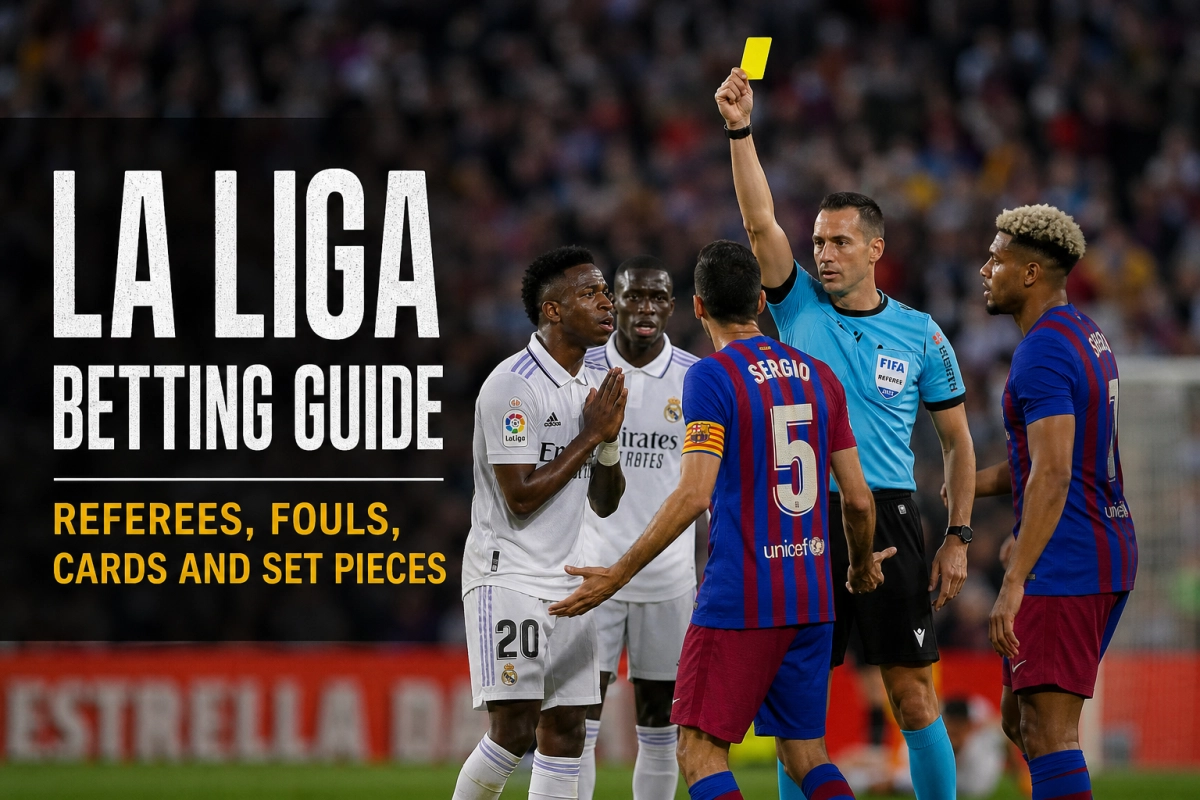
In-play, watch corner accumulation and referee tendencies: a late flurry of corners from one side or a ref who awards frequent soft fouls near the box are live indicators that markets will drift—this is where quick Asian-handicap hedges or corner-market cross-bets pay off.
Expected-goals patterns — when xG signals regression or persistence
xG is the clearest single predictor of future goal outcomes, but patterns matter: consistent overperformance of xG (scoring much more than xG suggests) often regresses, while chronic underperformance can mean an impending spike in goals. Look beyond total xG to shot map concentration (are chances clustered in high-value central areas?), xG per shot, and the balance between build-up xG and counter-attack xG.
Betting cues:
- Over/Under: If both teams accumulate high xG in recent matches but results were low (bad finishing), pre-match overlaps and early live minutes are prime times to back Overs expecting positive regression.
- BTTS: When both teams post elevated xG-for and concede non-trivial xG-against (even if one side won cleanly), BTTS probability is higher than raw scorelines show—especially against La Liga sides that press and invite transitions.
- Asian handicap: Use xG-for vs xG-against differentials to spot mispriced lines. An underdog with equal or superior xG-profile but unlucky recent results is a strong candidate for Asian +0.5/+1.0; favourites outperforming xG are risky at short handicaps.
Monitor minute-by-minute xG graphs during matches: a team piling up high-xG chances without finishing is a live trigger for Over and BTTS markets, while a sudden drop in xG flow from a pressing team after subs may signal the market’s next adjustment.
Combining metrics with form, injuries and market timing — constructing actionable bets
Individually, each metric nudges probabilities; together they create clear value opportunities. Build a checklist before staking: recent xG trend (last 5 matches), set-piece concession rate, crossing frequency + opponent aerial weakness, key injuries (centre-backs, target men, goalkeepers), and the expected tactical matchup (press vs possession). Weight these factors—xG and set-piece vulnerability typically carry more predictive power for goals markets than raw possession share.
Practical pre-match and live rules:
- Pre-match: If both teams show high xG and set-piece susceptibility, back Over 2.5 or BTTS early before bookmakers inflate lines. Prefer Asian handicap for marginal favourites when defensive injuries are confirmed.
- In-play: Use early moments (0–25 minutes) to read pressing intensity and corner accumulation. A sequence of high-xG chances without goals is a classic trigger to move into Over markets or take live BTTS.
- Risk control: Size stakes based on volatility—set-piece-driven goals are higher variance, so reduce stake or prefer Asian lines that offer half-returns on draws.
Timing matters: markets often under-react to tactical news (late injury to a central defender, a change from zonal to man-marking) and over-react to isolated events (early fluke goal). By mapping tactical metrics to specific market responses you can exploit both pre-match inefficiencies and intra-game momentum shifts in La Liga goals markets.
Putting the framework into practice
Turning tactical insight into repeatable results requires process, discipline and iteration. Treat the metrics and market cues as inputs to a decision system rather than guarantees; the goal is to convert an edge into a controlled, testable strategy that survives variance and market noise.
Practical steps to implement
- Start small and track everything: log pre-match reads, live triggers, stake sizes and outcomes so you can measure which cues actually predict value over time.
- Create simple rules for entry/exit: define the exact thresholds that prompt a pre-match bet or a live play (e.g., xG surge without goal within X minutes, corner accumulation that exceeds season norm).
- Backtest and paper-trade: validate ideas on historical La Liga data or in-play simulations before risking real bankroll on new signals.
- Automate monitoring where possible: use live xG/shot maps, corner trackers and injury feeds to reduce reaction time and avoid manual delays that erode value.
- Maintain a volatility-aware staking plan: reduce stakes on set-piece-driven plays and increase diversification across matches to manage tail risk.
Risk controls and mindset
- Expect drawdowns—variance is inherent in goals markets. Focus on edge consistency rather than short-term results.
- Avoid overfitting to single-season quirks or recency bias; continuously recalibrate weightings for each metric as new data accumulates.
- Keep emotions in check during live play: predefine acceptable hedges and stop-losses for Asian-handicap positions or multi-market exposures.
With measured implementation and disciplined record-keeping, tactical metrics become more than interesting analytics—they become operational signals that can improve selection, timing and risk control in La Liga goals markets. The final step is to iterate: test, learn, refine—and always let evidence, not hope, guide stakes.