Why Erling Haaland’s 2024 scoring run deserves a deep look
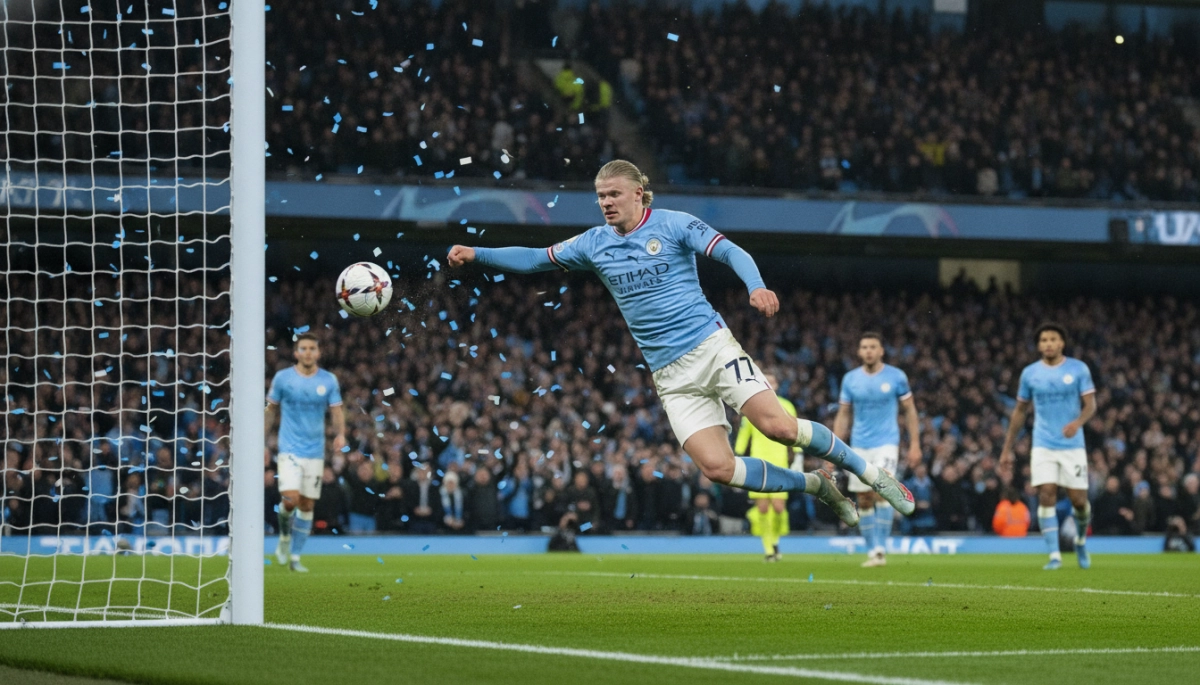
You may already know Haaland as one of the most prolific strikers in world football, but 2024 sharpened aspects of his game that are worth studying closely. This collection doesn’t just celebrate tallies — it breaks down how his movement, finishing variety, and situational intelligence created goals that changed matches and defined moments across competitions.
As you review the goals here, focus on three overlapping themes: timing, technique, and tactical context. Timing refers to how Haaland finds space at decisive moments; technique covers his finishing repertoire — from volleys to clinical solo drives; tactical context shows how teammates, pressing patterns, and in-game adjustments open the channels he exploits. Understanding these themes will help you appreciate not only the spectacle but the repeatable elements behind his success.
How this part of the collection guides your viewing
This first segment introduces the narrative arc of Haaland’s 2024 goals. You’ll get an early-season snapshot that highlights pattern recognition: the kinds of runs he favors, rebound authority, aerial dominance, and quick combination play in tight spaces. Each goal in this collection is annotated so you can replicate the observation process you’d use when analyzing attacking players, whether for coaching, scouting, or simply improving your tactical awareness as a fan.
- Look for recurring starting zones where Haaland begins his attacking actions.
- Note how often set-pieces and counterattacks contribute to his high-per-minute rate.
- Pay attention to support play — which teammates consistently supply the decisive pass or distraction.
Early 2024 goals that set the tone: patterns and pivotal moments
In the opening months of 2024 Haaland produced several goals that illustrate the traits you’ll repeatedly encounter throughout the year. These early strikes act like a practical primer: pinpointing timing on through-balls, explosive acceleration into half-spaces, and a mixture of one-touch finishes and composed chips. For you, this means identifying a checklist when you watch each clip: movement before the pass, body shape at contact, and positioning of defenders.
Key early matches and representative goal types
- Quick counter goal: a sprint into space after a turnover, finished with a low angled drive — shows transition ruthlessness.
- Aerial dominance: a near-post header from a whipped cross, demonstrating timing and upper-body leverage.
- Close-range poaching: tap-ins following rebounds, highlighting anticipation and penalty-area IQ.
- Composed one-on-one: a composed finish under pressure illustrating balance and calm in high-stakes moments.
By cataloguing these goal types and their match contexts, you’ll start to see the blueprint behind Haaland’s scoring consistency. In the next section, you’ll get a play-by-play analysis of several standout goals, including slow-motion breakdowns and the tactical build-up that made each finish possible.
Play-by-play breakdowns: three emblematic 2024 finishes
Below are three representative goals from 2024, each chosen because it isolates a different link in Haaland’s scoring chain: transition timing, aerial precision, and situational anticipation. Read each play like a coach — identify the trigger, the decisive two seconds, and the finishing choice.
Counter-strike clinicality: The move starts with a high-intensity turnover deep in Haaland’s half. A midfielder wins the ball and instantly looks up; a diagonal outlet finds the wide midfielder. Haaland’s run begins before the pass — a half-step drop to invite the defender forward, then an explosive sprint into the half-space between full-back and centre-back. The passer plays a low-driven through-ball that splits the last line. Haaland’s first touch is forward and wide, allowing the defender to wrong-foot; his second contact is a low, driven strike across the keeper. Two decisive elements: (1) recognition of the numerical advantage in transition and (2) a forward-first touch that converts momentum into a shot without breaking stride.
Aerial dominance from structured play: This goal emerges from a patient build-up on the flank. A full-back receives the ball high and has time to whip a near-post cross. Haaland delays his movement slightly so the centre-back commits to the cross rather than the run. He attacks the ball with a short, powerful vertical leap, using his shoulder to create separation and head placement to direct power downward past the keeper. The header is not speculative — it’s targeted, low enough to beat the goalkeeper’s reach. Key breakdown points: targeted crossing zone (near post for leverage), timing that forces the marker to make a binary choice, and head placement that emphasizes direction over sheer height.
Rebound poacher and area IQ: This sequence begins with heavy penalty-area activity: a shot from the edge of the box is parried by the keeper into a melee. Haaland positions himself slightly behind the first line of defenders, anticipating a second-phase ball. His movement is small and surgical — a half-turn to the near post when the keeper is grabbed by his momentum, then a compact, decisive finish with the instep. What stands out is his spatial awareness; he occupies the interstice with the highest probability of the second ball and acts before the chaos resolves.
Slow-motion study: micro-technical cues to watch when you rewatch the clips
When you slow these goals down, certain micro-details repeat: the non-kicking foot planting slightly ahead to create a forward lean; minimalized first touches that preserve speed; hip rotation that aligns the torso for both power and accuracy; and head posture that reads the keeper and defenders while executing the strike. Watch also how Haaland’s eyes operate — quick glances to the ball, then immediate scanning of keeper position and escape lane. Those sub-second visual checks determine whether he opts for placement or power.
Another repeatable cue is limb economy. In tight spaces he reduces unnecessary arm movement to maintain balance; in aerial duels he uses his arms for leverage, not to swing for extra lift. Finally, note the rhythm between pass and finish: an optimal window is often under two seconds. If the receiver hesitates, the defense resets; Haaland’s finishes capitalize on maintaining or shortening that window.
Support structure: how teammates construct high-probability finishes
Haaland’s goals are rarely solo inventions; they rely on a predictable support architecture. Full-backs stretching the pitch create diagonal lanes into which he can run. Midfielders who can switch play quickly or draw pressure create the half-space gaps Haaland exploits. Equally important are decoy runs — wingers and attacking midfielders pulling central defenders out of position so Haaland can occupy the high-probability pocket.
From a pressing standpoint, teammates force predictable clearances and turnovers. When the front six press in coordinated waves, opposition distribution becomes rushed and vertical spaces open. The assist economy is often simple: a one-touch vertical pass, a whipped cross, or a recycled shot into the box. In coaching terms, replicate these support elements — width, quick switches, and decoy movement — and you increase the frequency of chances a striker with Haaland’s instincts can finish.
How to make the most of the clips
- Rewatch in slow motion to isolate micro-technical cues (first touch, plant foot, hip rotation).
- Timestamp and annotate each finish — note the trigger, the two-second window, and the supporting action.
- Compare similar goal types across matches to identify consistent decision-making patterns.
- Turn observations into training drills: recreate the pass shape, defensive distraction, and finishing angle.
Final notes for coaches, analysts, and fans
Use this collection as a practical reference rather than a highlight reel alone: keep refining what you look for, test hypotheses in training or video sessions, and let the clips guide focused observation rather than passive viewing. If you want official profiles, extended highlights, and updated statistics to complement your analysis, visit Erling Haaland — Player Profile.