Reading live match signals to inform in-play soccer betting
This part explains what live match data and observable events reveal about momentum, danger and likely outcomes—so bettors can make disciplined in-play soccer betting decisions. Readers will learn which metrics matter (xG flow, shots, possession, corners), how to track substitutions and red cards, and the basics of following bookmaker line movement. The goal is practical: turn live information into structured choices for markets such as Asian handicap, over/under and BTTS while managing risk responsibly.
Which live metrics matter and why they shift expectations
Not all stats are equally useful in-play. Focus on a small set of reliable indicators that signal attacking intent, defensive vulnerability or game control:
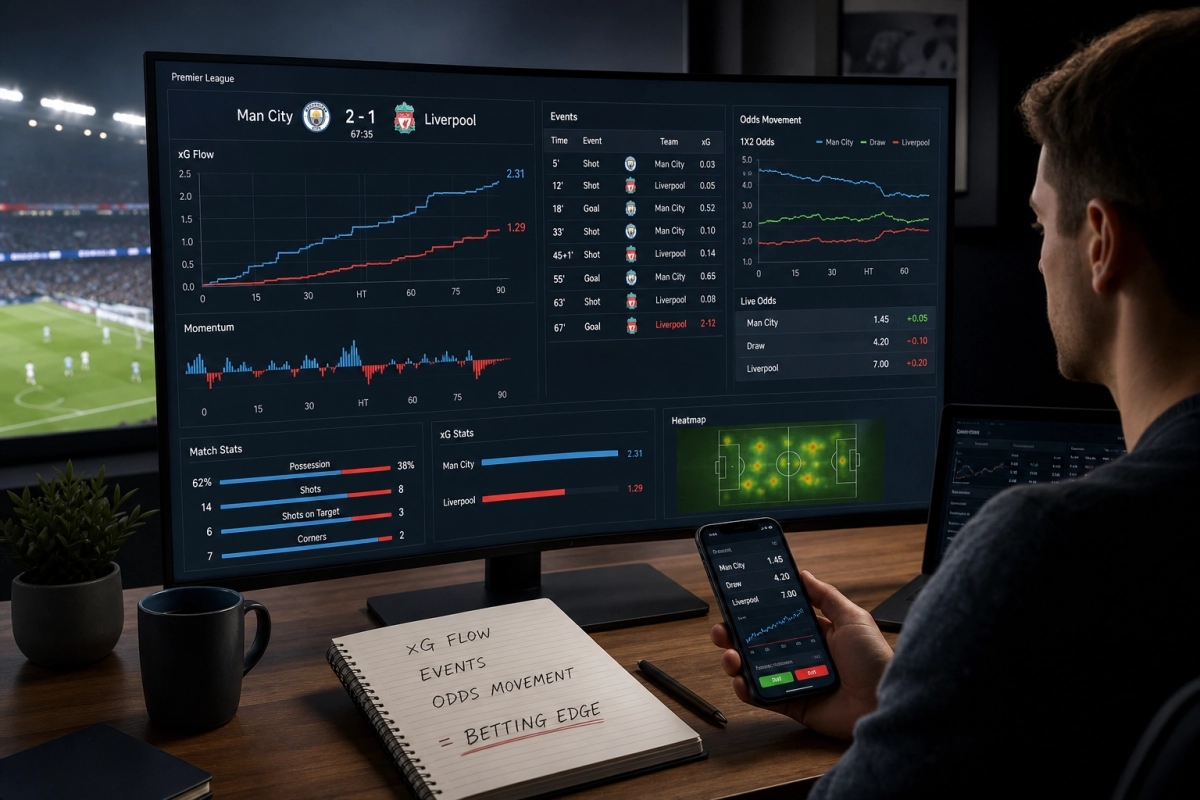
- xG flow (expected goals over time) — shows the quality of chances created for each side. A rising xG for a team after a substitution or tactical change is a red flag for the opposition.
- Shots and shots on target — frequency and location are immediate evidence of pressure. Many speculative shots from distance are less threatening than fewer high-quality shots inside the box.
- Possession versus dangerous possession — possession alone can be misleading; look for possession in the attacking third or sequences ending with shots/corners.
- Corners and set-piece frequency — sustained corners often correlate with imminent goals, especially late in games when tired defenders concede more set-piece chances.
Quick in-play checklist
- Is xG moving consistently toward one side? (indicates sustained pressure)
- Are shots increasing and are they from inside the box?
- Are corners accumulating for the same team?
- Has possession shifted into the attacking third rather than just keeping the ball?
Observable events that change probabilities faster than stats
Some events immediately alter match balance and bookmaker lines. Track these closely and respond with discipline rather than emotion.
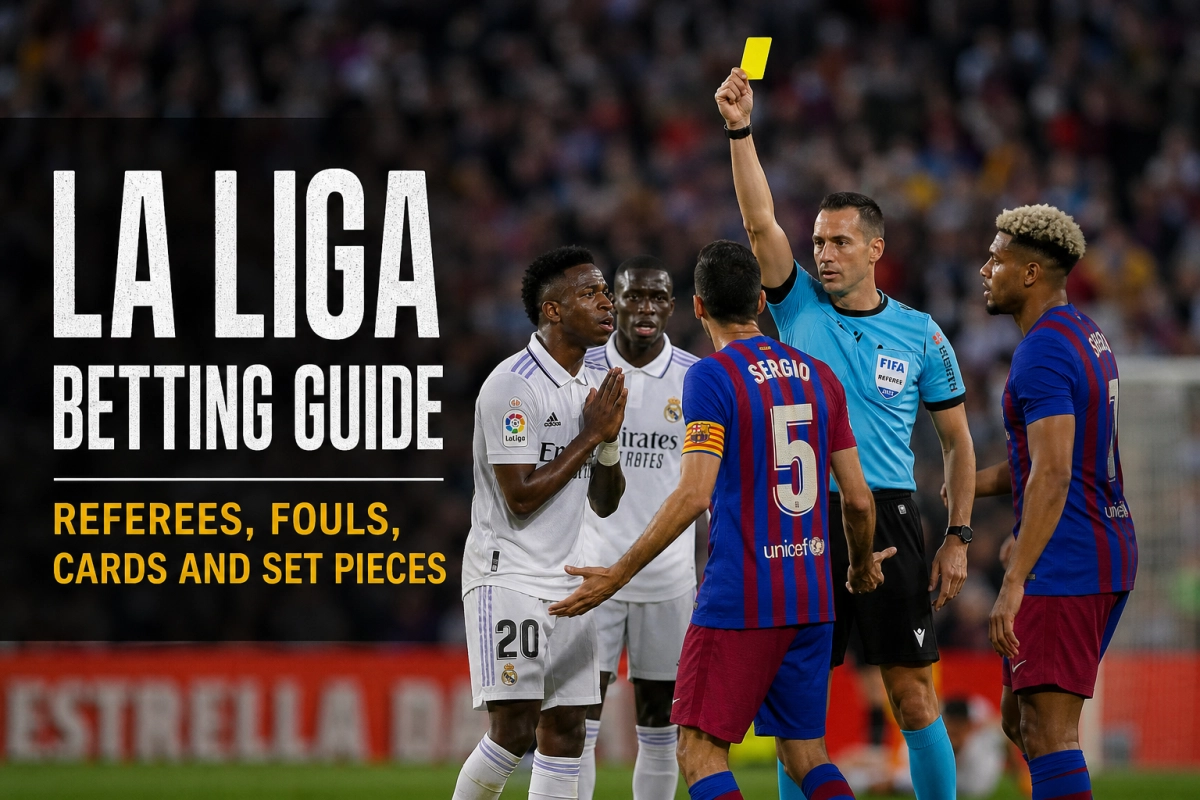
- Red cards — reduce defensive numbers and often increase expected goals conceded for the affected team. Asian handicap lines will usually adjust quickly; consider the time remaining before acting.
- Substitutions — attacking subs increase goal probability, defensive subs reduce it. Note the player roles, not just timing.
- Tactical shifts — formation changes or press adjustments (observed via possession shifts or more direct play) can quickly change which markets are attractive.
Combine events with real-time metrics: a team down 1-0 that immediately racks up corners and rising xG after an attacking substitution is a stronger over/under and BTTS candidate than a solitary shot from distance.
Next, the article will explain how bookmaker line movement reflects market expectations, how to read odds shifts practically, and rules for converting live signals into disciplined bets across Asian handicap, over/under and BTTS markets.
Reading bookmaker line movement in-play
Bookmaker lines react to two things: new information from the pitch (events and stats) and money coming in from bettors. Your job is to separate the two and interpret how movement changes implied probabilities.
– Distinguish info-driven moves from liquidity moves. If odds shift immediately after a red card, big substitution or a clear succession of high-quality chances (rising xG, multiple shots on target, corners), that’s information-driven and often justifies re-evaluating your position. If odds drift without any visible match change, it’s likely market noise or large money skewing a thin market — treat it with caution.
– Use magnitude and speed of change. A rapid shortening of a price (for example Asian -0.5 moving to -1 within minutes) after a substitution or tactical switch signals sharp conviction; slow drifts are more likely public sentiment. The larger the move for the same stimulus, the stronger the new market view.
– Check multiple sources. Compare prices across bookmakers and the betting exchange (if available). Exchanges reflect peer-to-peer demand and often show the truest market consensus. If an exchange price moves before books adjust, that’s a signal bookmakers will follow.
– Context matters: time remaining, current score and in-play metrics. A red card in the 15th minute has far more expected impact than one in the 85th. Similarly, an Over/Under line tightening at 70’ when xG and shots spike is more actionable than a similar move at 30’ with no supporting stats.
– Watch implied probability vs your assessed probability. Convert odds to implied probability and compare against the probability you estimate from xG flow, shots, possession and events. Only act when the market’s implied probability offers value relative to your assessment.
A practical indicator: when odds shorten AND you can verify at least one on-pitch justification (e.g., substitution + xG uptick or a red card + sudden corner accumulation), assume the market is recognizing real change — then consider entering with size scaled to confidence and time remaining.
Turning signals into disciplined in-play bets across markets
Convert observation into action with simple, repeatable rules. Use two independent signals before staking (a stat and an event, or two strong stat moves), limit stake size by time and confidence, and define exit rules.
– Stake sizing and risk control: set a small fixed percentage of your bankroll for in-play (1–3% typical). Reduce size as time runs down because variance rises — a 3% stake in minute 20 is different risk than the same stake in minute 80.
– Entry triggers by market:
– Asian handicap: back the team with clear attacking momentum after a goal/second-half substitution if xG and shot quality increase. Example rule: if trailing team sub on an attacking forward and adds ≥0.15 xG in 15 minutes with two shots inside the box, consider Asian +0.5 for the favorite or Asian -0.5 for the momentum side if they are now favorites. After a red card to the defending side and before 75’, favor the opponent on Asian markets, but scale stake for remaining time.
– Over/Under: use minute-adjusted xG rate. If cumulative xG since the 60th minute implies a goal expectancy that lifts the match’s expected remaining goals above the book’s line (e.g., expected remaining goals >0.6 while Over 0.5 is still high price), back the Over. Prefer Over markets early in a sustained onslaught and late when tiring defenders concede many corners/set pieces.
– BTTS: require both teams to show attacking signs. If both xG flows are positive in the same window, or one team’s attacking uptick follows a defensive substitution weakening them, BTTS becomes attractive. Avoid BTTS when one side has stopped creating shots despite possession.
– Exit rules: predefine cash-out or hedging thresholds. If the market moves against you and your initial signals dissipate (momentum reverses, xG drops), take a small loss rather than chasing. If your bet becomes partially hedgable at favorable prices, consider locking profit.
Keep a log of trades: event, metrics at entry, price, stake, exit and outcome. Over time this disciplined feedback loop converts observational skill into a profitable in-play edge.
Putting the approach into practice
These techniques are tools, not guarantees. The difference between a good idea and a profitable habit is consistent, disciplined execution. Commit to small stakes while you learn, keep objective records, and treat each in-play decision as an experiment: define your rules, measure outcomes, and iterate. Over time the combination of reliable live signals, event awareness and prudent line-reading will let you separate noise from genuine opportunity.
A simple 4-step practice plan
- Observe before betting: watch 15–30 live matches purely to track xG flow, shots, corners and key events; don’t stake while learning the rhythm.
- Log every signal: create a short spreadsheet with minute, score, xG changes, shots/SoT, corners, substitutions/red cards, entry trigger and odds movement.
- Simulate and then bet small: start with simulated stakes or micro-stakes (1% or less of your bankroll) until you have ~100 logged in-play decisions to evaluate.
- Review and refine: analyze losing and winning trades for pattern causes (bad timing, signal noise, emotional errors) and adjust your entry/exit and sizing rules accordingly.
Final note on mindset
In-play edges are built on patience, repeatability and risk control. Prioritize process over short-term outcomes: protect your bankroll, follow predefined rules, and avoid chasing losses after a bad sequence. If you focus on improving how you read the game and how you manage risk, the results will follow.