La Liga Betting: How Referee and Disciplinary Data Improve Match Analysis
Start with the Referee Appointment
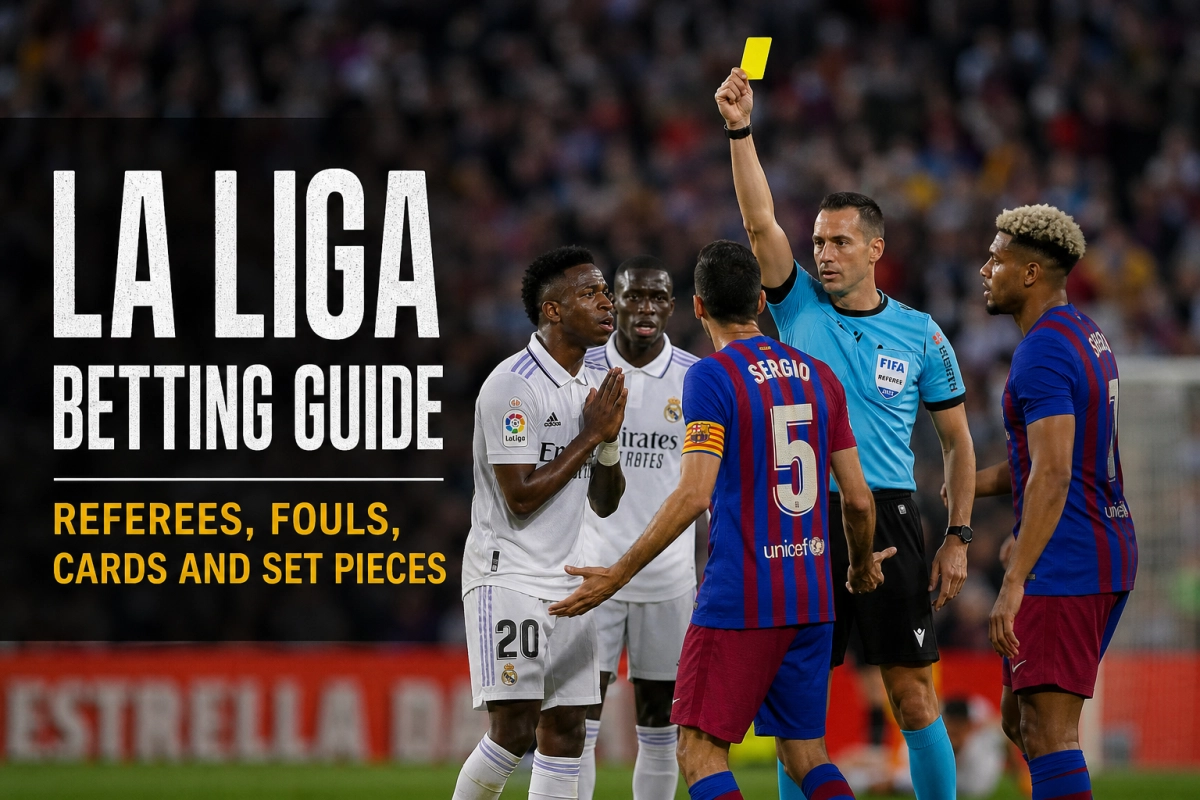
Effective La Liga betting analysis begins before comparing football odds. Referee appointments, team discipline, tactical style and set-piece tendencies can all influence markets covering cards, match results, goals and player props. These factors do not remove uncertainty, but they can help bettors build a more complete probability assessment.
The first step is confirming the appointed referee through a reliable, up-to-date source. A referee profile should be reviewed only after the appointment is official, because assignments can change and early reports may be incomplete. Useful measures include average yellow cards, fouls, red cards and penalties awarded across a meaningful sample.
Average figures should be treated as context rather than a prediction. A referee who frequently shows cards may still oversee a quiet match if both teams avoid duels, while a normally lenient official may record more bookings in a heated fixture. Competition level, derby pressure, home support and the expected game state can all affect disciplinary behaviour.
- Cards per match: indicates the official’s general booking tendency.
- Fouls per match: shows how often challenges are penalised.
- Penalty history: may be relevant to penalty and goals markets, but can be highly variable.
- Red-card record: should be assessed over several seasons where possible, as sending-offs are relatively infrequent.
- VAR involvement: may influence penalty or dismissal outcomes, although past incidents do not guarantee future decisions.
Combine Referee Data with Team Foul and Card Statistics
Referee trends become more useful when matched with the behaviour of both teams. A team’s cards received, fouls committed, tackles attempted and cards drawn can reveal how its style interacts with the appointed official. For example, an aggressive pressing side facing a dribbling-heavy opponent may create more challenges than its season average suggests.
Card betting usually refers to whether a total number of bookings goes over or under a bookmaker’s line, or whether a specific player receives a card. Before considering either market, bettors should check:
- Recent home and away disciplinary records.
- Expected starting line-ups and likely defensive assignments.
- Players regularly involved in tackles, transitions or tactical fouls.
- Whether the match has strong league-position or rivalry pressure.
- Each team’s response when leading, drawing or trailing.
Player props require particular caution. A defender facing a fast winger may have more opportunities to foul, but that does not mean a booking is likely at any particular price. The player must also be expected to start and play enough minutes. Suspensions, rotation and a tactical change can make historical data less relevant.
Translate Discipline into Other Betting Markets
Disciplinary information can also support match result and goals analysis. Frequent fouls may slow the tempo, while repeated set-piece concessions can create additional attacking opportunities. However, those possibilities should be tested against expected goals, recent form, injuries, line-ups and home-and-away performance rather than used in isolation.
Set pieces include corners, free kicks and penalties. A team that delivers dangerous dead balls against an opponent conceding many fouls near the box may deserve closer review in goals, corners or player-shot markets. The next stage is to examine how tactical matchups and set-piece quality turn these statistical signals into a realistic betting case.
Assess How Tactical Matchups Create Fouls and Set-Piece Opportunities
Team statistics should be interpreted through the likely tactical battle rather than treated as fixed forecasts. A side that attacks mainly through wide areas may win more corners, while an opponent defending deep may concede repeated crosses and free kicks. Conversely, a team that relies on quick transitions can force tactical fouls when possession is lost in dangerous areas.
Several questions can help connect the matchup to a betting market:
- Which team is likely to control possession and push the opponent into a low block?
- Will either side press aggressively immediately after losing the ball?
- Are the main attacking threats located on the wings or through central combinations?
- Does either team regularly target tall defenders at attacking corners and free kicks?
- Are set-piece takers and first-choice aerial defenders expected to start?
These details may support a case for corners, goals or player shots, but the quality of delivery remains important. A high corner count does not automatically indicate a strong goals angle if the team produces poor chances from dead-ball situations. Expected goals from set pieces, shots following corners and the conversion of headed opportunities can provide more useful context than raw totals alone.
Use Disciplinary Patterns to Read the Expected Game State
Cards and fouls are often affected by the match state. A team that regularly trails may commit more fouls late in matches while attempting to stop counterattacks, whereas a side protecting a lead may use possession to reduce defensive exposure. Early bookings can also alter the tactical picture, particularly when a full-back or holding midfielder must defend against a direct opponent.
When reviewing historical data, separate first-half and second-half trends where possible. A referee may issue relatively few early cards but become more interventionist after half-time, or a team may accumulate bookings only once its structure begins to break down. This distinction matters when comparing full-match card lines with first-half markets.
Game-state analysis can also improve player props. A striker may have more shot opportunities if his team is expected to chase the match, while a defensive midfielder could face greater card risk when protecting a narrow advantage. These assumptions should be checked against probable line-ups, substitutions and the strength of each team’s bench. A player who is frequently replaced before the final stages may be a weaker option for a late-card or late-shot selection.
Compare the Evidence with the Price and Reassess on Match Day
The final step is comparing the estimated probability with the available odds. A strong statistical trend is not automatically a good bet if the bookmaker has already adjusted the line. For example, a referee’s high card average may be reflected in a demanding total, leaving little value unless the team matchup points to an even more intense contest.
Maintain separate notes for reliable indicators and more uncertain ones. Starting line-ups, referee confirmation, defensive assignments and weather can materially change the assessment shortly before kick-off. If a set-piece specialist is absent, a key defender is suspended or the appointed referee changes, the original reasoning may no longer apply.
Responsible analysis also means accepting that a sound process can produce a losing result. A penalty may be missed, a card may not be shown for a clear foul, or a dominant team may fail to convert its chances. Tracking closing odds, selections and the assumptions behind each decision helps determine whether the method is improving, rather than judging it solely by short-term results.
Build a Repeatable Betting Process
The value of referee and disciplinary analysis lies in making each betting decision more deliberate, not in finding a guaranteed outcome. Patterns become more useful when they are tested against the specific matchup, expected line-ups, tactical context and current price.
Keep the process consistent, record the reasoning behind each selection and be prepared to pass when the evidence is conflicting or the odds offer no margin. Over time, disciplined assessment and careful price comparison provide a stronger foundation for evaluating La Liga markets than relying on reputation, recent results or isolated statistics.