Champions League Betting: How Competition Context Shapes Markets
Start with the Champions League format and match context
Successful Champions League betting analysis begins with understanding what a match means within the competition. The same two teams can produce very different betting opportunities in a league-phase fixture, a first-leg knockout tie or a decisive second leg.
In the 36-team league phase, each club plays eight matches. Finishing position matters because the leading teams progress directly to the round of 16, while others may need to enter a play-off or face elimination. That creates different incentives from a domestic league match: a team may prioritise avoiding defeat, protecting goal difference or securing points before a difficult away fixture.
Before reviewing football odds, ask:
- Does either team need a win, or would a draw be acceptable?
- Is qualification still open, or is one side already under pressure?
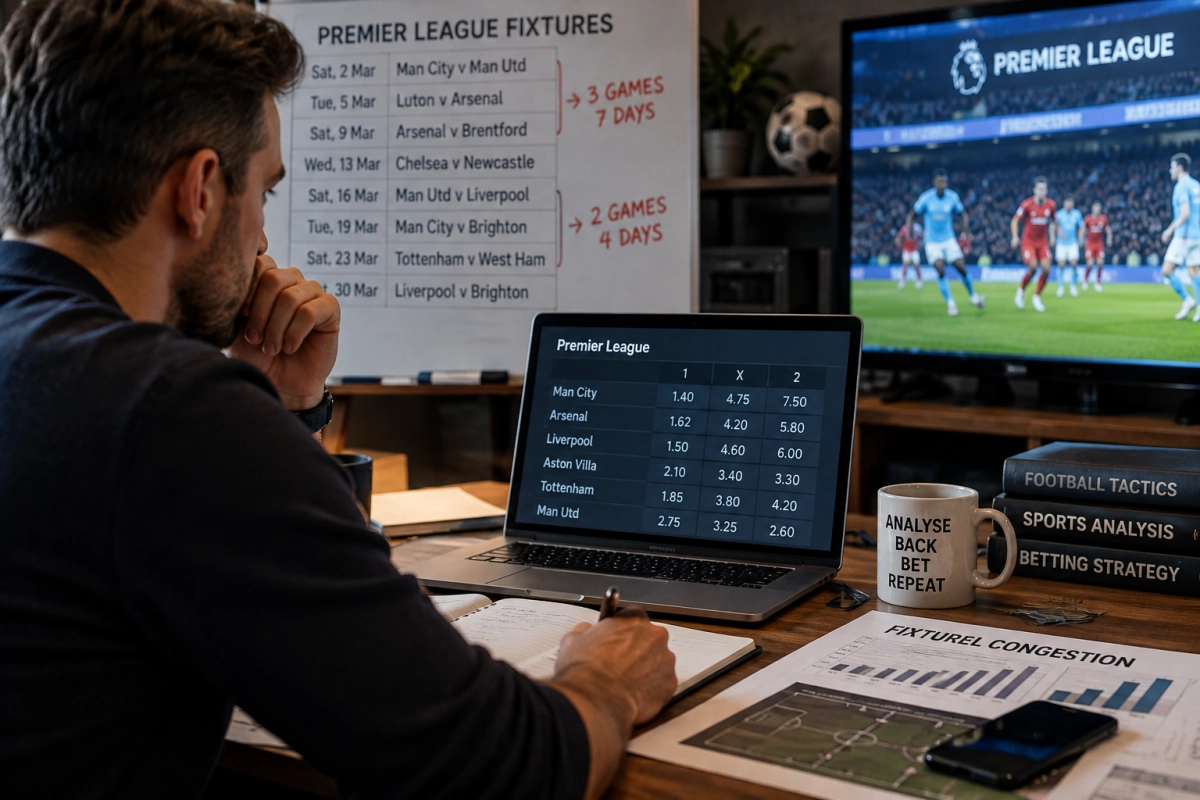
- Could rotation, injuries or a congested domestic schedule affect the starting line-ups?
- How have both teams performed at home and away in comparable matches?
The match result market, often called 1X2, covers a home win, draw or away win. However, the best-informed decision may involve a different market. Double chance includes two results, while draw no bet returns the stake if the match finishes level. These options can be relevant when the competition context makes a cautious approach likely, although they still carry risk and are not automatically better value.
First-leg and second-leg incentives change the likely approach
Why the first leg may be more controlled
In a two-legged knockout tie, the first match is only part of the contest. A home team may want to gain an advantage without conceding, while the visiting side may prioritise keeping the tie close. This can influence result, goals and both-teams-to-score bets.
A cautious opening period does not necessarily mean a low-scoring match. One early goal can force the trailing team to attack, creating space and improving the prospects of over-goals or BTTS selections. Conversely, two well-organised teams may limit chances for long periods. Review each side’s expected goals, shot volume, pressing style and defensive record rather than relying only on the fixture label.
How the second leg can be different
The aggregate score is the combined score from both matches. For example, if a team won the first leg 2–0, it begins the second leg with a two-goal advantage. Its priorities may shift towards compact defending, controlled possession and counter-attacks, while the opponent may need to increase tempo and take more risks.
This can make second-leg betting more complex. A team that is stronger overall may not need to win the individual match, while the team chasing qualification may create plenty of attacking opportunities but also leave gaps behind. Consider the scoreline alongside home advantage, away incentives and tactical flexibility before assessing match-result, over/under or BTTS markets.
The next step is to connect these incentives with probable line-ups, tactical match-ups and the specific price offered in each betting market.
Home advantage matters, but so does the away team’s incentive
Home advantage is a useful starting point, not a complete betting argument. The home side may benefit from familiar surroundings, stronger crowd support and a more aggressive opening, but its approach can depend heavily on the aggregate score. A team leading the tie may use possession to slow the match rather than pursue a clear victory, even when playing in front of its own supporters.
The away side’s objective is equally important. If it needs to overturn a deficit, it may press higher, commit full-backs forward and accept more defensive exposure. That can increase the chance of an away goal, but it also creates opportunities for the home team to counter-attack. If the visitors are protecting an advantage, however, they may defend in a compact shape and value long periods without conceding over attacking ambition.
Compare each team’s home and away performances in relevant competitions. Look beyond win percentages to chance creation, goals conceded, set-piece records and the number of matches in which the side scored first. A strong home record may be less useful if the team is facing an opponent that only needs a draw.
Probable tactics can reveal opportunities beyond the match result
Team news should be connected to tactical roles rather than treated as a simple list of absences. Missing centre-backs can affect a side’s ability to defend crosses and counter-attacks, while the loss of a holding midfielder may leave space between the defence and midfield. An unavailable striker could reduce finishing quality, but a replacement with greater pace might make a team more dangerous in transition.
Consider how the likely formations interact. A narrow midfield can help one team control central areas, while also allowing the opponent’s full-backs to find space. Aggressive pressing may create turnovers high up the pitch, although it can become less effective if the opposition plays through the first line. These details can influence goals and BTTS markets more directly than a general statement that one club is “in better form”.
Game state matters as well. If the first goal is likely to change the match substantially, markets such as over 2.5 goals may offer a different angle from a pre-match result selection. Yet avoid assuming that a favourite will continue attacking after taking the lead. Its priority may become protecting the aggregate score, especially late in a second leg.
Compare the market price with the expected match pattern
Analysis is only useful when it is compared with the odds available. A likely home win may already be reflected in a short price, leaving limited value if the match is expected to be cautious. In that situation, a goals market or draw-related selection might better reflect the anticipated pattern, although each option has its own risks.
For BTTS, ask whether both teams have a realistic route to scoring. The answer may come from contrasting incentives: one side could dominate possession while the other relies on counters or set pieces. For over and under markets, assess whether the aggregate score encourages urgency, whether either team can settle for a draw and how quickly the game could open after a goal.
Finally, compare prices across several bookmakers and check them close to kick-off, when confirmed line-ups and tactical news become available. Do not treat a shorter price as proof of a stronger bet. The objective is to identify whether the odds fairly represent the competition context, probable tactics and range of plausible outcomes.
Make the context part of every Champions League betting decision
Champions League markets are easier to assess when the fixture is viewed as a developing contest rather than an isolated 90 minutes. Competition position, aggregate score, venue and tactical priorities can all alter the probabilities behind the same headline prices.
Use that context to form a realistic view of how the match may unfold, then compare it with the available odds. If the price does not provide sufficient value, the most disciplined decision may be to wait for clearer information or leave the market alone. Betting should remain measured, informed and within clearly defined limits.