How football rose from local pastime to a global language
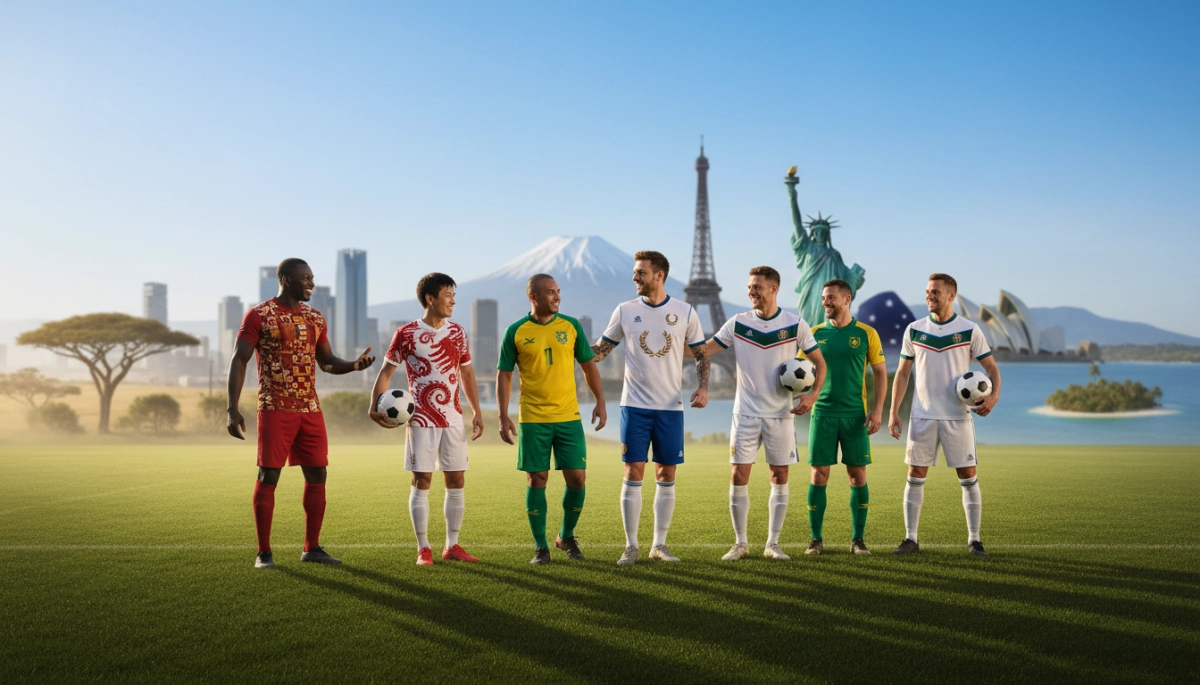
When you look at a packed stadium or a neighborhood street game, you’re witnessing more than sport: you’re seeing a shared cultural language. Football’s spread across continents created local styles, produced national heroes, and linked communities through tournaments, migration and media. Understanding the most famous players from every continent helps you trace how techniques, tactics and cultural values traveled and transformed the game.
In this part, you’ll learn why a handful of players became global icons, and you’ll begin a continent-by-continent exploration starting with South America and Europe. These regions gave rise to legends who reshaped tactics, inspired social movements, and pushed the boundaries of individual skill.
Starting the continental tour: champions from South America and Europe
To appreciate global icons, you should first recognize the defining contributions from South America and Europe. Each region brought distinct styles—South America’s flair and improvisation, Europe’s tactical rigor and physical intensity. Below are representative figures whose careers illustrate these regional influences and whose reputations crossed borders.
South America: flair, creativity, and cultural impact
- Pelé (Brazil) — You’ll often hear Pelé called the first global football superstar. His goal-scoring records, three World Cup victories, and charismatic public presence turned him into a symbol of Brazil’s footballing identity and the sport’s potential for worldwide influence.
- Diego Maradona (Argentina) — Maradona combined extraordinary dribbling, vision and a controversial edge. When you study his 1986 World Cup run, you see how a single player can elevate a nation and provoke conversations about talent, politics and media.
- Lionel Messi (Argentina) — Representing a modern blend of South American creativity and global professionalism, Messi’s consistency, playmaking and records make him a living example of how local roots can produce a global icon.
Europe: tactical evolution, professionalism, and global export
- Johan Cruyff (Netherlands) — Cruyff’s Total Football philosophy changed how teams thought about space and player roles. When you study his influence, you see the ripple effects on coaching, youth development and continental competitions.
- Franz Beckenbauer (Germany) — Beckenbauer redefined defensive play with elegance and leadership. His ability to control games from the back influenced generations of defenders and demonstrated Europe’s focus on tactical innovation.
- Cristiano Ronaldo (Portugal) — Ronaldo exemplifies modern athleticism, global branding and longevity. You’ll notice how his career highlights the commercial and performance-oriented era of European club football.
These players illustrate how individual brilliance and regional context combined to produce figures who are recognized far beyond their home countries. As you move forward through the article, you’ll explore how other continents—Africa, Asia, North America and Oceania—nurtured their own icons and how those stories connect to the global game.
Africa: pioneers who turned local passion into global prominence
When you think about African football’s contribution to the world game, you should focus on both the individual brilliance and the broader social narratives those players carried. George Weah (Liberia) stands out not only as the first and only African Ballon d’Or winner (1995) but as someone whose career bridged sport and politics—later becoming his country’s president—symbolizing football’s potential as a vehicle for national hope. Roger Milla (Cameroon) changed the global imagination with his exploits at the 1990 World Cup: his back-heeled goals, corner-flag celebrations and uncanny timing helped African teams command respect on the biggest stage.
Other figures illustrate different facets of Africa’s export to world football. Samuel Eto’o (Cameroon) combined pace, clinical finishing and club trophies in Spain and Italy, showing that African forwards could dominate elite leagues. Didier Drogba (Ivory Coast) blended on-field leadership with off-field influence—his role in stabilizing his homeland during political unrest demonstrated how a footballer can be a unifying public figure. Collectively, these players show how African talent reshaped club tactics, enriched European leagues, and turned continental competitions into global scouting grounds.
Asia: trailblazers reshaping perceptions and professional pathways
Asia’s most famous footballers helped shift perceptions from the region being peripheral to being essential talent pools. Hidetoshi Nakata (Japan) was among the first Asian stars to build a sustained career in Europe during the late 1990s and early 2000s—his technical elegance and cosmopolitan image promoted Asian players in Serie A and beyond. Park Ji-sung (South Korea) brought tactical discipline and relentless energy to Manchester United, becoming a model for how Asian midfielders could influence high-tempo, trophy-winning teams.
On the women’s side, Sun Wen (China) was a global superstar whose performances at World Cups in the 1990s elevated women’s football in Asia and pushed FIFA to pay greater attention to the women’s game. In goal-scoring terms, Iran’s Ali Daei held the men’s international scoring record for years, underscoring Asian football’s serious competitive edge. These pioneers laid pathways for younger talents, improved scouting networks, and demonstrated that rigorous training, professionalism and cultural adaptability produce players who can thrive in top leagues.
North America and Oceania: evolving leagues, dual roles and breakout stars
North America and Oceania have produced icons whose careers reflect evolving infrastructures and transcontinental careers. In North America, Mexico’s Hugo Sánchez and Javier “Chicharito” Hernández showed that Liga MX talent could shine in Europe; the United States’ Landon Donovan and Clint Dempsey became faces of the sport domestically while winning club and international plaudits. On the women’s side, Canada’s Christine Sinclair embodies longevity and leadership—her international goal record and advocacy for women’s sport have global resonance. More recently, Alphonso Davies (Canada) represents a new wave: a fast, versatile winger who became a Champions League starter at a young age.
Oceania’s footprint is smaller but meaningful. Tim Cahill (Australia) became the continent’s most recognizable goal scorer on World Cup stages—his trademark headers and knack for key goals helped put Australia on the global map. New Zealand’s Wynton Rufer and Ryan Nelsen are other examples of players who translated local leagues into European success. Together, these players signal how improved domestic leagues, youth academies and migration pathways are expanding the reach of players from North America and Oceania, integrating them fully into the global football conversation.
Icons shaping football’s next chapters
The players profiled here are more than record-holders and headline-grabbers; they are cultural signposts that point to where football has been and where it might go. Their careers show how talent migrates, how ideas about tactics and training travel, and how the sport’s stories—on television, social media and in local communities—shape identities and aspirations. As infrastructure improves, women’s football accelerates, and scouting and analytics deepen, new icons will emerge from unexpected places, building on the groundwork laid by past pioneers.
For anyone interested in how football continues to evolve at global and grassroots levels, monitoring development programs, youth academies and international competitions provides useful insight. Organizations that support these pathways, such as FIFA development initiatives, help connect local potential with global opportunity—and ensure the next generation of icons has the platforms to be seen and celebrated.
Frequently Asked Questions
Which continents have produced footballers who changed how the game is played?
Every continent has produced players who altered perceptions or tactics: South America contributed creative flair and dribbling artistry; Europe pushed tactical systems and professionalism; Africa showcased physicality, pace and leadership on the world stage; Asia introduced disciplined, technically strong pros who opened pathways to top leagues; North America and Oceania offered evolving professional structures and breakout stars who bridged domestic and international play.
Who were key pioneers for African and Asian players making the jump to European leagues?
For Africa, figures like George Weah, Roger Milla, Samuel Eto’o and Didier Drogba demonstrated that African talent could excel at the highest club levels. For Asia, Hidetoshi Nakata and Park Ji-sung were early examples of players adapting successfully to Europe’s tactical and physical demands, helping clubs and scouts view Asian players as reliable contributors.
How has the rise of women’s football changed the global narrative about icons?
Women’s football has introduced its own icons—such as Sun Wen and Christine Sinclair—whose performances and leadership expanded the sport’s visibility and legitimacy. Their success has driven investment, inspired policy shifts, and encouraged broader media coverage, ensuring that future generations of icons will emerge across both men’s and women’s games worldwide.